Firebase authentication integrated with role based frontend flows.
Overview
What it is
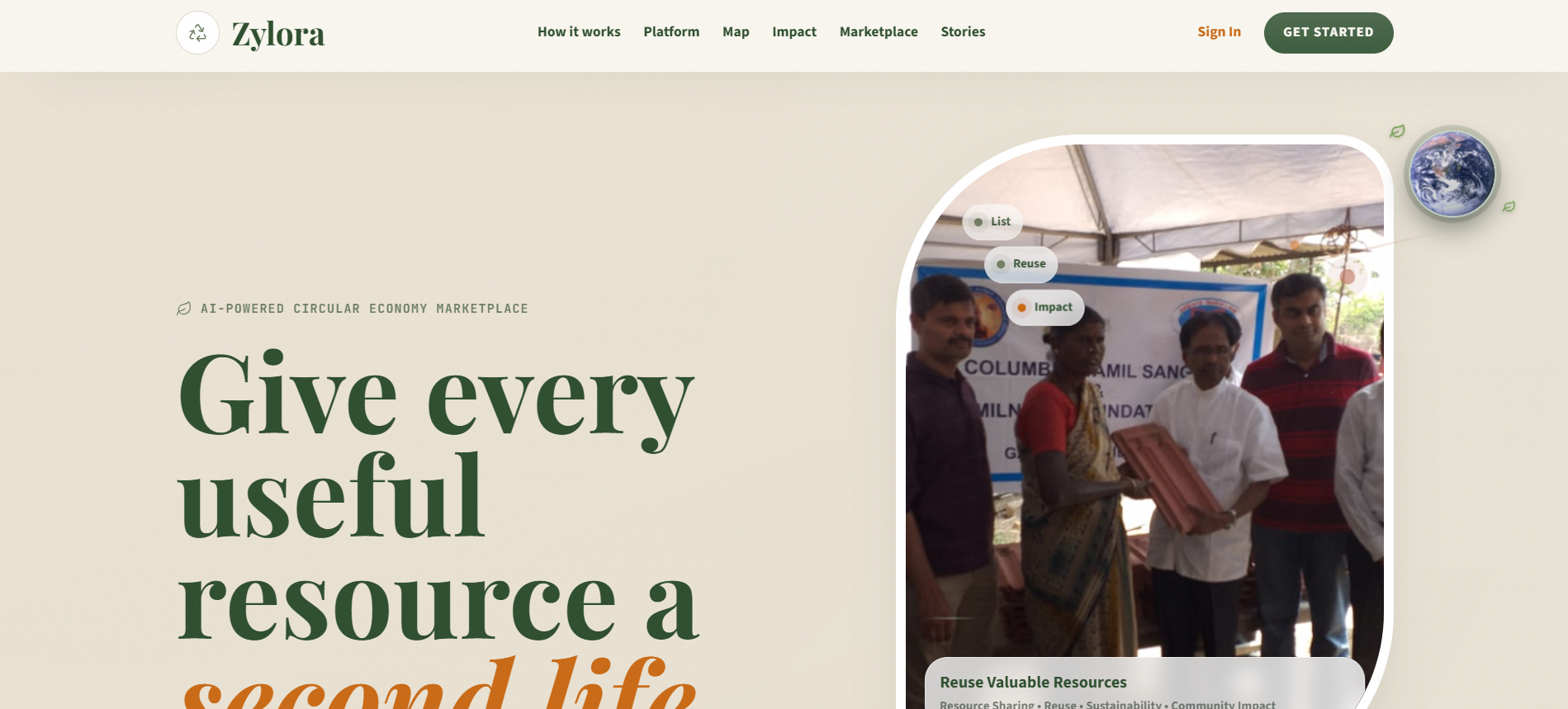
Zylora is a reuse marketplace for resource discovery, donation, resale, nearby search, messaging and role based dashboards.
The goal was to connect listing discovery, map context, authentication and multiple user roles in a practical MERN product.
Designed for: People, donors, buyers, sellers, and organizations participating in reuse or donation workflows.
Key Features
Verified product behavior
Marketplace and resource listings with saved item behavior.
Leaflet/OpenStreetMap screens with geolocation and nearby discovery logic.
Donation and resource request flows for reuse workflows.
Buyer, seller, organization, verification, impact and admin pages.
Backend pricing, valuation, user, auth, and resource routes with MongoDB models.
Separate FastAPI AI-service files for listing intelligence and pricing support.
User Flow
Product journey
- A visitor explores the landing page, marketplace, or resource map.
- They authenticate and move into role based dashboards.
- Users create, browse, save, message about, donate, or request resources.
- Admin and verification pages support trust and platform-management workflows.
Architecture
How it is built
React, TypeScript, Vite, Redux Toolkit, React Query, Firebase, React Router, and Leaflet.
Express with TypeScript, MongoDB, Mongoose, Firebase Admin, geolib, helmet, rate limiting, and zod.
Python FastAPI service files for listing intelligence and pricing/valuation support.
Leaflet, OpenStreetMap, and geolocation utilities.
Data and APIs
Models and route responsibilities
Data model
- Listing, organization, resource request, valuation, platform operations, and user models are present.
- The data layer supports marketplace resources, roles, valuation, and platform workflows.
API design
- Auth routes coordinate authenticated user flows.
- Resource routes handle listing/resource operations.
- Pricing and valuation routes support AI pricing decisions.
- User routes support profile and role based behavior.
Challenges
Problems I worked through
Role based product flow
The frontend separates dashboards and pages for different user contexts instead of forcing one generic view.
Map discovery
Leaflet and geolocation utilities are used to keep resource discovery tied to location context.
Multiple services
Core marketplace APIs live in Express while listing intelligence is separated into a Python FastAPI service.
Screenshots
Product walkthrough
Reflection
What I learned
This project helped me practice larger product flows, map UI, role based screens and service boundaries.
Future improvements
- Add more automated coverage around resource and valuation routes.
- Improve moderation states for reports and verification.
- Strengthen offline and empty states around maps and messaging.
Deliberately omitted
- No real community adoption, client, or impact metric was claimed.
Verified From